
Your child’s diagnosis
Transposition of the great arteries (TGA)
01
How blood flows
Transposition of the great arteries (TGA)
The same region in both views. The usual view is a comparison, not a treatment result.
TGA · two loops need a connection
- Less oxygen
- Mixed blood
- More oxygen
Step 1 of 4
One loop returns to the body
The aorta leaves the right ventricle. Blood returning from the body goes through RA and RV, then back to the body without visiting the lungs.
How to read this map
Follow the arrows to see connections. This is a map, not the shape or position of a heart. Both sides work together; the story follows one part at a time. A crossing with a white gap is not a connection; a dot marks a junction. With story controls focused, use left/right arrows, Home or End.
A simplified d-TGA example before repair with an atrial mixing connection. Other openings, including a VSD or an open duct, may also contribute. Arrows show possible routes, not measured exchange. This is not congenitally corrected TGA.
Colours describe this example: blue means less oxygen, red more oxygen, and purple mixing. Blood is always red in real life. Line widths and animation do not measure flow, pressure, oxygen saturation or severity.
Diagram sources and scope
A simplified d-TGA example before repair with an atrial mixing connection. Other openings, including a VSD or an open duct, may also contribute. Arrows show possible routes, not measured exchange. This is not congenitally corrected TGA.
Original Heart Up Close connection map · Source check: 26 October 2026 · Independent clinical review pending.
Transposition of the great arteries (TGA)
- One loop returns to the body. The aorta leaves the right ventricle. Blood returning from the body goes through RA and RV, then back to the body without visiting the lungs.
- The other loop returns to the lungs. The pulmonary artery leaves the left ventricle. Blood picks up oxygen in the lungs, returns through LA and LV, then goes back to the lungs.
- A connection allows mixing. An opening between the atria connects the loops. This example follows oxygen-rich blood crossing from LA to RA. The direction and amount depend on the connections and pressures.
- Some oxygen-rich blood joins body supply. Follow blood from the lungs across the atrial connection, through the right ventricle and into the aorta. Mixing helps oxygen reach the body before repair.
A simplified d-TGA example before repair with an atrial mixing connection. Other openings, including a VSD or an open duct, may also contribute. Arrows show possible routes, not measured exchange. This is not congenitally corrected TGA.
Optional: explore the heart in 3D
One difference at a time
Where does the artery to the body start?
Explore the artery to the body in two example hearts.
Loading 3D connects to Sketchfab, which receives your IP address and may use cookies. The model may use a lot of mobile data. Sketchfab privacy policy.
Usually
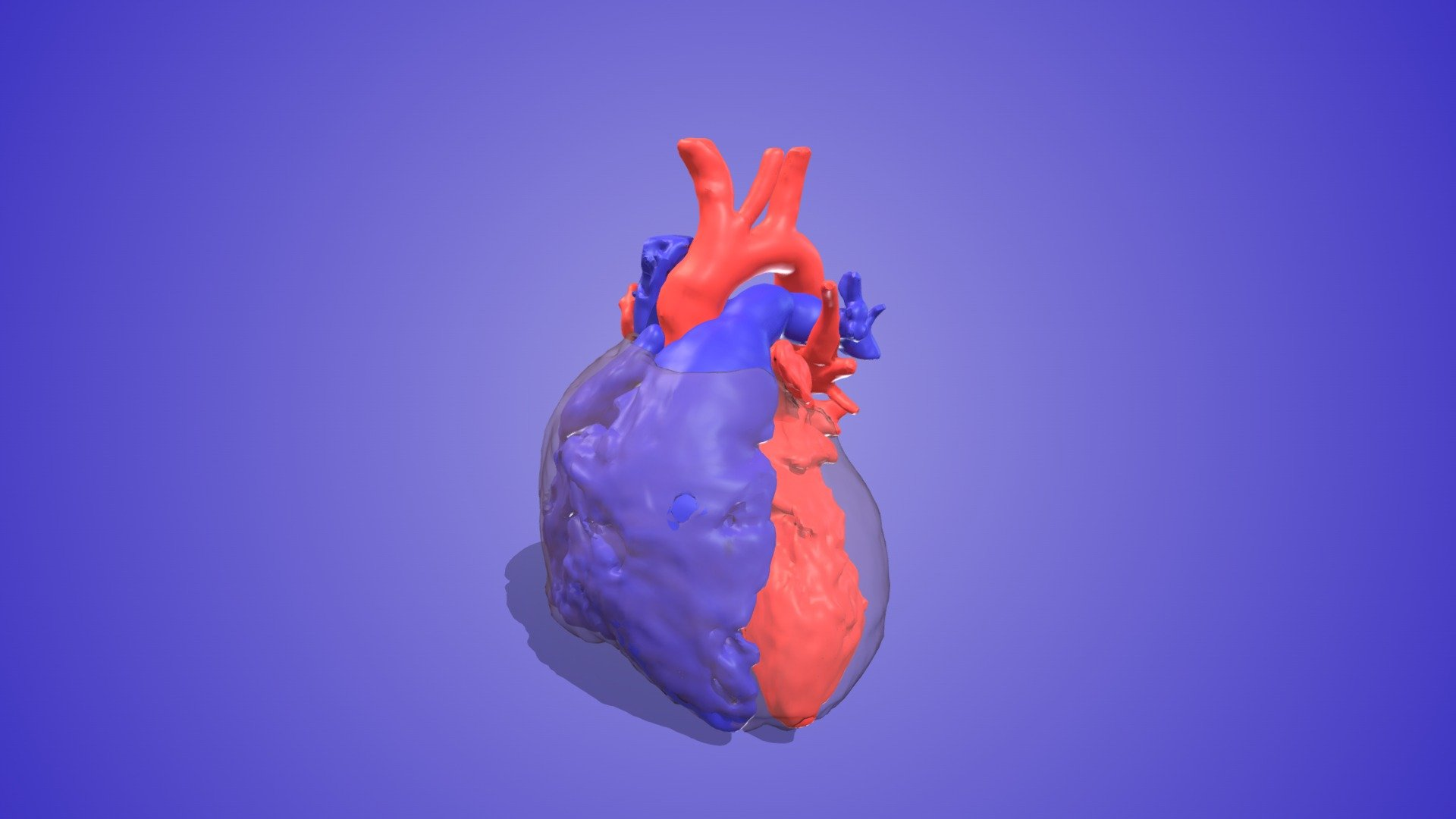
This artery leaves the left ventricle.
With transposition (TGA)
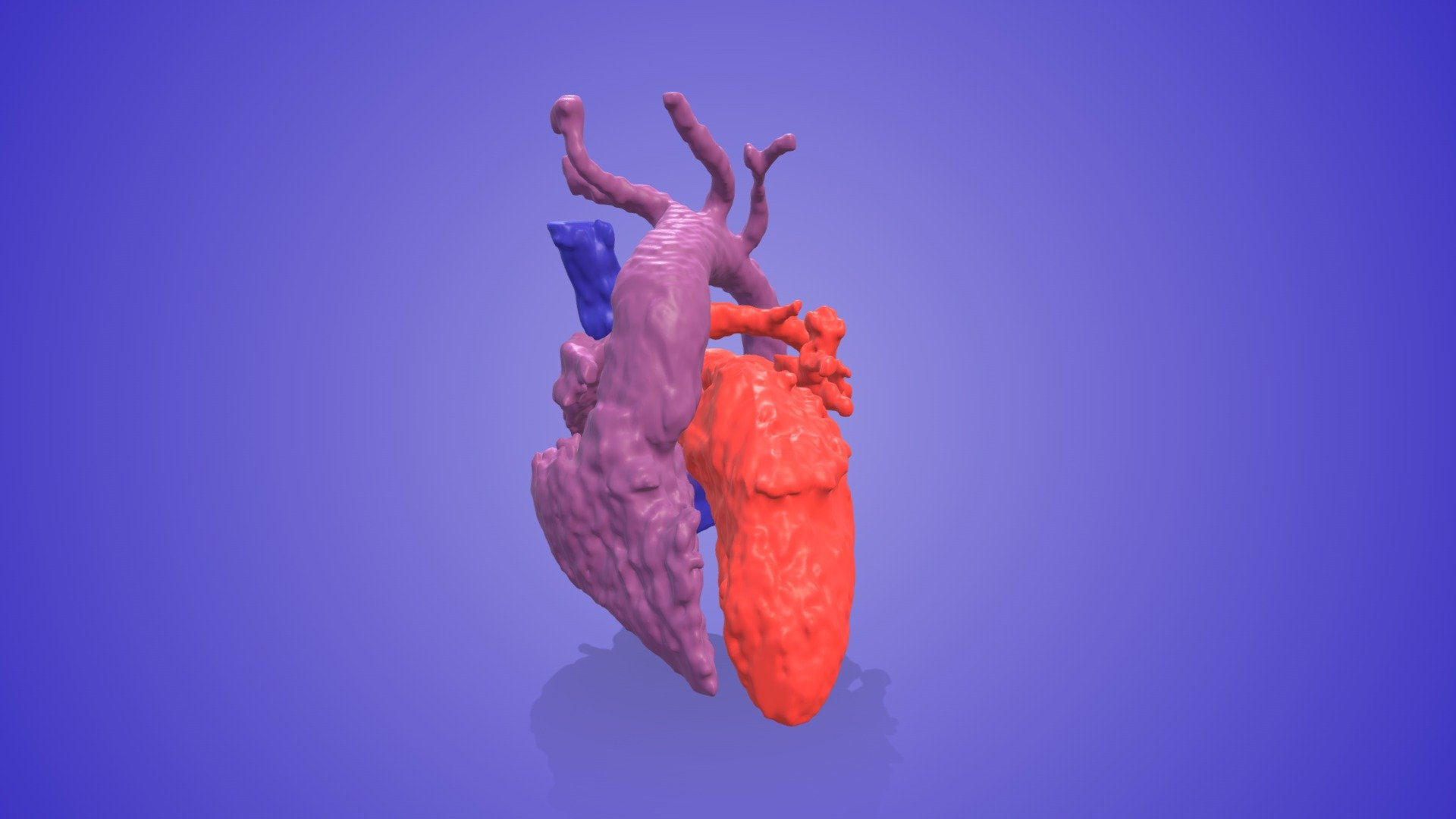
This artery leaves the right ventricle.
Models: 3D Heart Project · CC BY-NC 4.0 · Our labels and explanation await clinical review.
About these pictures and sources
These models show the spaces blood fills inside the heart and its vessels. The typical-heart model also shows a see-through outline of the heart muscle. Colour helps show the parts; blood is never blue.
The examples come from different people. They are not before-and-after pictures, and their sizes should not be compared. The labels identify the artery, not its hidden connection to a pump.
Original previews converted to PNG and framed to fit the page, with added labels and captions. The models are from the University of Alberta / Stollery Children’s Hospital. No endorsement is implied.
Sources checked 10 October 2026. Independent clinical review pending.
- Explore the typical-heart model (opens in a new tab)
- Explore the transposition model (opens in a new tab)
02
Diagnosis and care
Diagnosis and tests
A pregnancy scan can find TGA. This allows the team to plan birth near specialist care. If it was not found before birth, low oxygen levels or a blue or grey appearance soon after birth may lead to urgent tests. A baby may also have feeding or breathing difficulties. Other heart differences can change the signs.
An echocardiogram, or echo, is an ultrasound scan of the heart. It shows which chamber connects to each artery and the openings that allow blood to mix. Oxygen measurements show some of the effects on the baby. Before surgery, the team checks the coronary arteries, which supply the heart muscle. Ask to see these on a drawing. Their position can affect the operation.
Care and follow-up
Medicine may keep a temporary blood vessel, called the arterial duct, open to help blood mix. A balloon atrial septostomy makes the opening between the upper chambers bigger if more mixing is needed. An arterial switch operation reconnects the main arteries and moves the coronary arteries to the new aorta. Some heart arrangements need other operations.
Ask which steps provide short-term support and which are the main repair.
An opening between the lower chambers or narrowing towards the lungs can change the care plan. People who had older types of TGA surgery need care suited to their repair. Regular specialist checks remain important after an arterial switch too. Ask which parts of the heart and which functions the team will check as your child grows.
Daily life
Early decisions can feel very fast. Ask the nurse to help you separate what is needed immediately from what can be discussed again later. Request the precise name of the operation for your records, and ask how follow-up will be arranged closer to home.
03
Questions to ask
Save the questions you want to take to your next appointment. You can edit them in your Journal.
- What connections are allowing blood to mix in our child’s heart at present, and are they providing enough mixing?
- Does the opening between the atria need to be made bigger, and what would that procedure aim to improve?
- Is an arterial switch suitable for our child, and could you explain why you recommend it or another operation?
- Are there other heart differences that affect our child’s care, and how do they change the immediate plan?
- What will you check as our child grows after treatment, and how often will they need specialist appointments?
Sources and review
Sources checked 9 October 2026. Independent clinical review pending.
- British Heart Foundation: Transposition of the great arteries
Accessed 9 October 2026
- Children’s Heart Federation: Transposition of the Great Arteries (TGA) Information Sheet
Accessed 9 October 2026